Blockchain Integration for Small Business Accounting: Why It’s Not Just for Big Tech
Let’s be honest — when you hear “blockchain,” you probably think of crypto bros, volatile markets, or maybe that one friend who won’t stop talking about NFTs. But here’s the thing: blockchain is quietly becoming a game-changer for small business accounting. And no, you don’t need to be a tech wizard to use it.
Think of blockchain like a digital ledger that’s impossible to tamper with. Every transaction gets recorded in a “block,” then linked to the previous one — creating a chain. Once it’s in, it’s locked. No erasing, no “whoops, I fat-fingered that number.” For small business owners drowning in spreadsheets and receipt piles? That’s pure gold.
Why Your Small Business Actually Needs This
I know what you’re thinking: “My accounting software works fine. Why complicate things?” Well… maybe it works fine, but does it work smart? Traditional accounting relies on trust — trust that your bookkeeper didn’t make a mistake, trust that your bank’s data matches your records, trust that no one’s cooking the books. Blockchain removes that blind trust. It replaces it with cryptographic proof.
Here’s a scenario: You run a small bakery. You buy flour from a supplier, sell pastries to customers, and pay taxes quarterly. With blockchain, every single transaction — from the flour invoice to the croissant sale — gets recorded in a shared, verifiable ledger. Your accountant, your supplier, and even your tax authority (if they’re on board) can see the same data in real time. No more reconciliation headaches. No more “the check is in the mail” excuses.
The Real Pain Points Blockchain Solves
Let’s break it down into stuff that actually keeps you up at night:
- Fraud and errors — Human error is inevitable. Blockchain’s immutability means once a transaction is recorded, it can’t be altered without consensus from the network. That’s a huge relief for audits.
- Slow payments — Cross-border payments can take days. Blockchain-based payments (like stablecoins) settle in minutes, with lower fees. Your cash flow thanks you.
- Receipt chaos — Losing receipts is a tax nightmare. Smart contracts can automatically generate and store digital receipts for every purchase or sale. No more shoeboxes.
- Trust issues with partners — If you’re collaborating with freelancers or suppliers, blockchain provides a transparent trail. Everyone sees the same data. No he-said-she-said.
How Blockchain Integration Actually Works (Without the Jargon)
Okay, so you’re intrigued. But how do you actually do it? You don’t need to build your own blockchain — that’s like building your own internet. Instead, you integrate with existing platforms that use blockchain technology.
Most small businesses start with a hybrid approach. You keep your current accounting software (like QuickBooks or Xero) but connect it to a blockchain-based layer. Think of it as a “truth layer” that sits underneath your usual tools. Services like Request Network or Centrifuge let you issue invoices, track payments, and verify data on the blockchain without changing your workflow much. Some newer accounting platforms, like Blox or Gilded, are built specifically for blockchain-native businesses but can be adapted for traditional ones.
Here’s a quick comparison to help you visualize:
| Feature | Traditional Accounting | Blockchain-Integrated Accounting |
|---|---|---|
| Data permanence | Can be edited or deleted | Immutable, tamper-proof |
| Reconciliation | Manual, time-consuming | Real-time, automated |
| Audit trail | Paper-based or digital logs | Cryptographically verified |
| Payment speed | 1-5 business days (bank) | Minutes (crypto or stablecoins) |
| Cost for cross-border | 3-5% fees + FX markup | 0.1-1% fees |
See the difference? It’s not about replacing your accountant — it’s about giving them better data. And honestly, your accountant will probably love you for it.
Smart Contracts: The Silent Workhorse
You’ve probably heard the term “smart contract.” It sounds complicated, but it’s actually dead simple. A smart contract is just a piece of code that automatically executes an action when certain conditions are met. Like a vending machine — you put in money, it gives you a soda. No human needed.
For accounting, this is a dream. Imagine this: You have a contract with a freelancer. They submit an invoice. The smart contract checks the work (maybe via a simple approval from you), then automatically releases payment from your crypto wallet. The transaction is recorded on the blockchain instantly. No chasing, no late fees, no “I forgot to pay you.”
You can even set up recurring payments — rent, subscriptions, payroll — all handled by smart contracts. It’s like having a robotic bookkeeper that never sleeps. Sure, it requires a bit of setup upfront, but once it’s running? Smooth sailing.
But Wait — What About Taxes?
Ah, taxes — the elephant in every small business owner’s office. Blockchain actually makes tax compliance easier, believe it or not. Because every transaction is timestamped and immutable, you have a perfect audit trail. No more guessing which receipts are from last year. Plus, some jurisdictions (like the EU and parts of the US) are experimenting with blockchain-based tax reporting. You can automatically generate tax reports from your blockchain data.
That said, you still need a human accountant to handle deductions, credits, and local laws. Blockchain doesn’t replace expertise — it just makes the grunt work disappear.
Common Misconceptions (Let’s Bust ‘Em)
I hear a lot of pushback from small business owners. Let me address a few:
- “It’s too expensive.” — Actually, many blockchain accounting tools have free tiers or low monthly fees. The cost savings from reduced errors and faster payments often outweigh the subscription.
- “I don’t want my data public.” — Fair point. But most business blockchains are permissioned — only approved parties (you, your accountant, your bank) can see the data. It’s private, just verifiable.
- “I don’t understand crypto.” — You don’t need to. Many integrations work with fiat currency (USD, EUR) behind the scenes. The blockchain is just the backbone.
- “It’s a fad.” — Maybe, but enterprise adoption is skyrocketing. Walmart, Maersk, and even the US Treasury are using blockchain for supply chain and payments. It’s not going away.
Getting Started: A Simple Roadmap
Alright, you’re sold. Where do you begin? Here’s a no-nonsense plan:
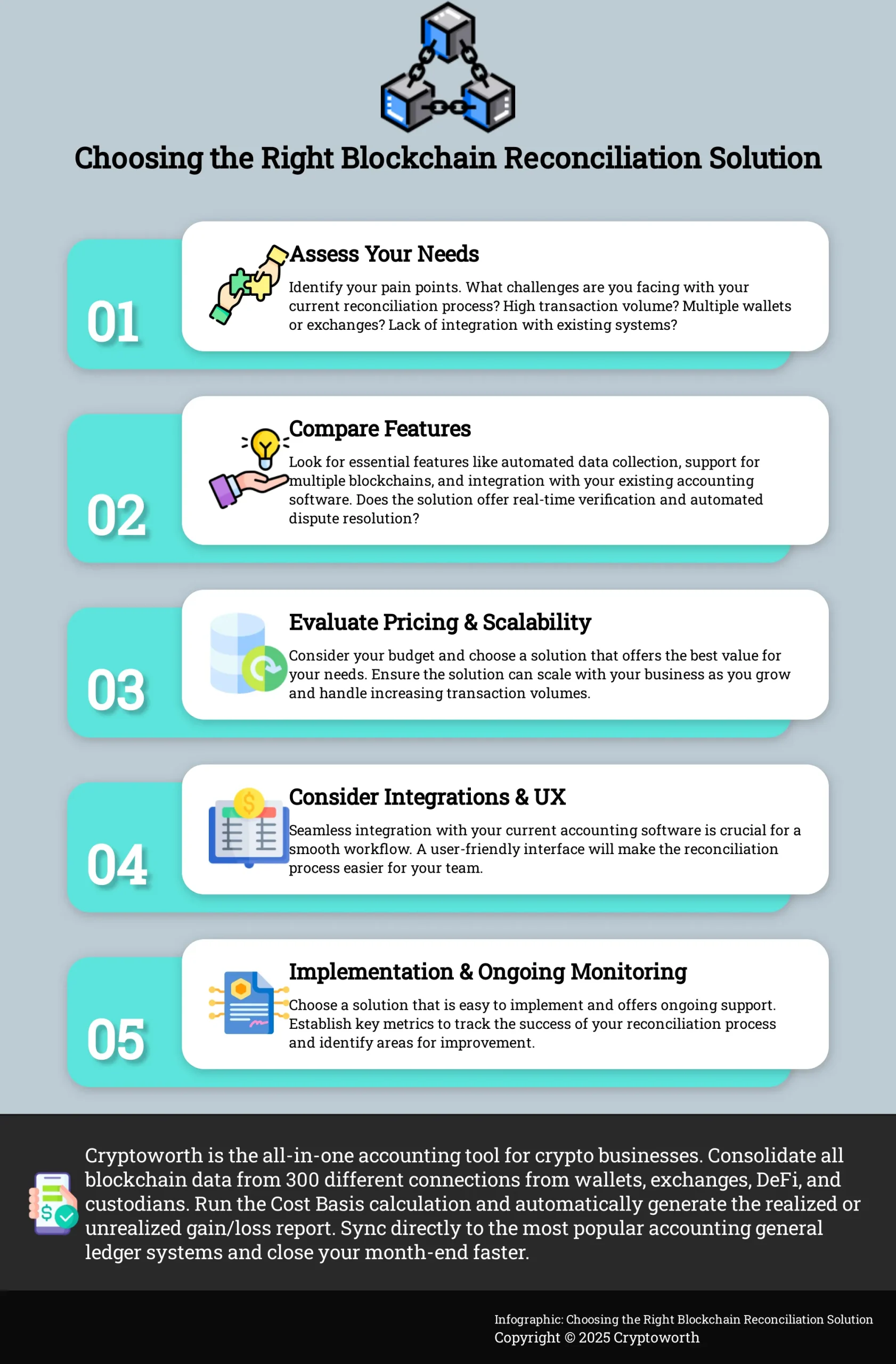
- Step 1: Audit your current pain points. Are reconciliation delays killing you? Do you lose receipts? Identify the biggest headache.
- Step 2: Pick a pilot project. Don’t overhaul everything. Maybe start with invoice tracking or cross-border payments for one supplier.
- Step 3: Choose a tool. Look at Gilded for invoicing, Request Network for payment requests, or Blox for full accounting. Most offer free trials.
- Step 4: Involve your accountant. They need to understand the new data flow. Some might resist — but show them the audit trail benefits.
- Step 5: Scale gradually. Once you’re comfortable, add smart contracts for payroll, then integrate with your bank.
Honestly, the hardest part is the first step. After that, it’s just tweaking and learning.
The Quiet Revolution
Here’s the thing about blockchain integration for small business accounting — it’s not flashy. It won’t make headlines. But it will make your life easier. It’s like switching from a paper map to GPS. You don’t notice the difference until you’re stuck in traffic, and suddenly you realize you’ve been taking the long way for years.
Small businesses are the backbone of the economy. They deserve tools that don’t treat them like second-class citizens. Blockchain isn’t just for Fortune 500 companies anymore. It’s for the bakery owner, the freelance designer, the local plumber. It’s for anyone who wants to spend less time on bookkeeping and more time on what actually matters — building something.
So maybe don’t think of it as “blockchain integration.” Think of it as… finally getting your financial house in order. Without the headache.